


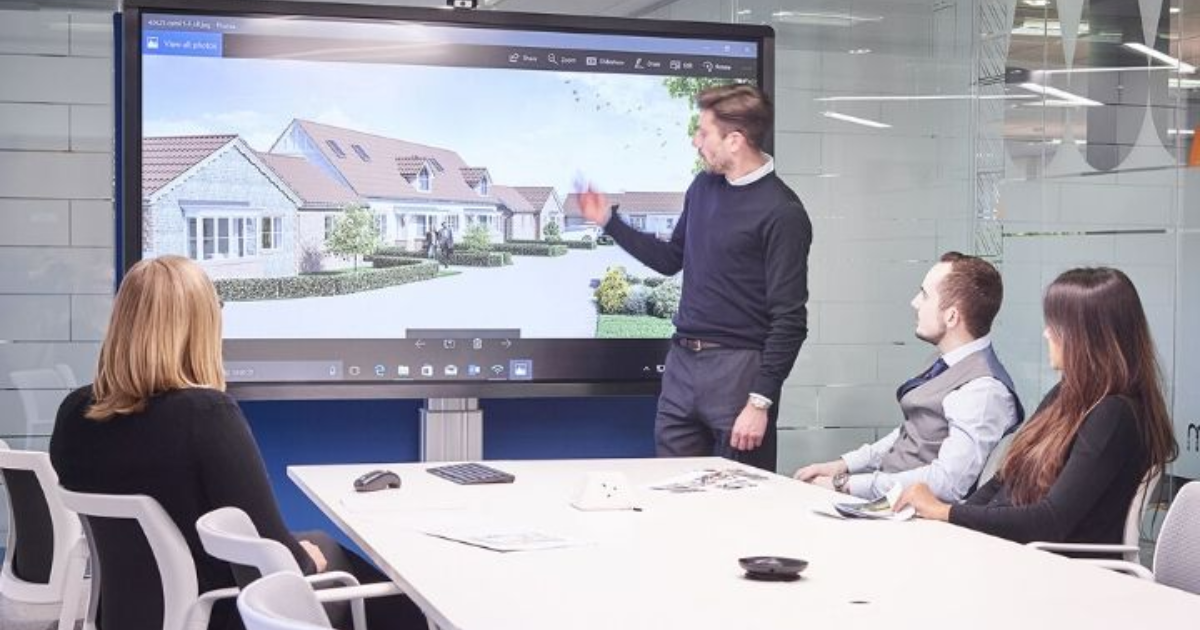
You have been in that meeting. The one where the first five minutes are eaten up by someone fiddling with cables, the screen refusing to connect, and half the remote attendees sounding like they are underwater. It is frustrating, it is avoidable, and it is exactly the kind of problem a smart conference room system is built to solve.
If you are thinking about upgrading your meeting spaces or starting from scratch, understanding what this technology actually does will help you make the right call. And no, it is not just a fancy TV with a remote. A conference room system is a fully integrated environment where audio, video, lighting, and connectivity work together seamlessly. Let us break it down.
What Exactly Is A Smart Conference Room System?
At its core, this conference room system is a technology-enabled meeting space designed to make collaboration effortless. It typically includes a high-quality display or video wall, a professional-grade camera, microphones, speakers, and a central control system that ties everything together.
The keyword here is integrated. These components are not just placed in the same room. They are configured to work as a unified system. You walk in, tap one button, and the room is ready. The camera follows the speaker, the audio is clear for everyone on the call, and the lighting adjusts automatically. That is the experience a well-built smart conference room delivers.
The Core Components You Should Know About
Every smart conference room system is built around a few essential elements. The display is usually a 4K screen or a video wall suited to the room size. The camera is often an auto-tracking PTZ unit that keeps the active speaker centered in frame.
Audio is arguably the most critical component. That means ceiling or table microphones, echo cancellation technology, and speakers calibrated to the room’s acoustics. Then there is the control system, often a touchscreen panel on the table or wall, that lets users manage everything without a manual.
On top of that, most modern systems integrate with UC platforms like Zoom Rooms or Microsoft Teams Rooms, so your remote participants get the same quality experience as the people in the room.
Why Is It Different From A Regular Conference Room?
A traditional conference room might have a projector, a speakerphone, and maybe a whiteboard. It works, until it does not. A smart conference room system removes the friction entirely.
Instead of juggling multiple remotes or cables, everything is unified. Booking systems can even be integrated so the room shows availability on a panel outside the door. When the meeting is over, the system shuts down automatically. There is no wasted power, no forgotten displays left on overnight, and no IT call needed to start a meeting.
Who Benefits Most From This Technology?
Honestly, any organization that holds regular meetings benefits. But the return is especially strong for businesses with hybrid teams, multiple locations, or frequent client-facing calls where professionalism matters.
Healthcare organizations, law firms, universities, and enterprise businesses with large campuses are among the strongest candidates. These environments need reliability, and a smart conference room system is built to deliver exactly that.
Is It Complicated To Manage?
This is where good design makes all the difference. A properly engineered system should be simple enough for anyone to use without training. The complexity is handled on the back end by the integrator.
That is the philosophy behind the work done by Projectus. We design systems built for real users, not just for demos. Network-aware, IT-friendly, and supported long after installation. That means when something does need attention, there is an accountable team ready to help.
Ready To Build A Smarter Meeting Space?
If you are ready to stop losing meeting time to tech failures and start running productive, professional sessions, a smart conference room system is the right investment. Talk to the team at Projectus to explore what the right setup looks like for your organization.