


Portland’s workplaces have changed more in the last five years than in the previous twenty. Hybrid work has become the default for most knowledge workers. The physical office is no longer where all the work happens. It is where the important conversations happen: the strategy sessions, the client meetings, the team moments that do not translate well to a chat message or an asynchronous video. When those conversations depend on meeting room technology, that technology has to perform.
The organizations in Portland that have invested thoughtfully in meeting room technology are seeing real returns: faster meeting starts, higher room adoption, lower IT support burden, and a more equitable hybrid experience for remote and in-person participants alike. This guide covers how meeting room technology supports Portland workplaces specifically.
The Portland Hybrid Work Reality
Portland’s workforce is genuinely hybrid. Major employers like Nike, Intel, and the network of healthcare and professional services organizations that anchor the metro’s economy have all established hybrid models that require meeting rooms to serve two audiences simultaneously: the people in the room and the people joining from wherever they are working that day.
Meeting room technology that was designed before hybrid work was the norm serves one of those audiences well and the other poorly. In-room participants have the physical presence, the side conversations, and the visual context of everyone in the room. Remote participants have a fixed camera view, variable audio quality, and no visibility into the room dynamics that shape the conversation. Modern meeting room technology addresses this imbalance directly.
What Modern Meeting Room Technology Includes
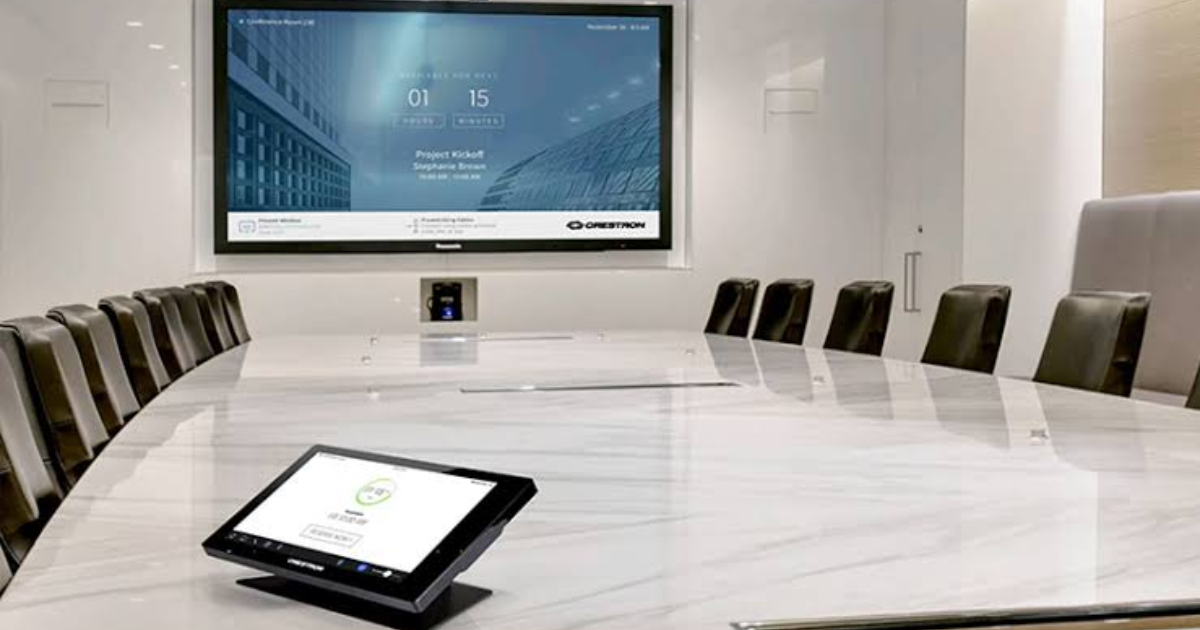
Effective meeting room technology for a Portland workplace includes displays sized and positioned for the room’s viewing distances, intelligent cameras with auto-framing or speaker-tracking capabilities, microphone systems with coverage for every seat, speakers that deliver even audio across the room, a control system that enables one-touch meeting start, and connectivity to the UC platform your organization uses.
Each of these components works together. The camera that frames participants well is useless if the microphone does not capture them clearly. The microphone that captures every voice is undermined by a room with such poor acoustics that it captures the echo alongside the voices. Good meeting room technology is a system, not a collection of individual products.
The IT Supportability Requirement
To understand how meeting room technology supports Portland workplaces, you need to know how IT fits into all of this. IT teams are managing more AV infrastructure than ever, often without a meaningful increase in AV-specific staff. Meeting room technology that is not designed for IT supportability creates a permanent overhead that consumes IT capacity without producing value.
Supportable meeting room technology is documented, network-aware, remotely manageable, and built on certified platform hardware that receives firmware updates reliably. It gives IT visibility into system health before users discover problems, and it provides a defined escalation path when on-site response is required.
Consistency Across Portland Locations
Portland organizations that operate across multiple floors, buildings, or locations need meeting room technology that delivers a consistent experience everywhere. When the room in the downtown office works exactly like the room in the Beaverton satellite office, users build confidence in the technology and stop defaulting to their laptops as a workaround.
Build Meeting Rooms Portland Will Use
Now that you know how meeting room technology supports Portland workplaces, maybe you should consider one for your commercial space too. Projectus designs and deploys meeting room technology across Portland and the Tigard market with a focus on user experience, IT supportability, and long-term reliability. Talk with a Solutions Architect about what your workplace needs.