


If you have a row of printed posters on your walls or a static display looping the same image that has shown for three years, you are not alone. Many businesses are still running traditional signage, not because they prefer it, but because they have not yet seen a clear side-by-side of what they are giving up. The digital signage vs traditional displays conversation is more than a technology debate. It is a question of how effectively you want to communicate.
This guide gives you the honest comparison: where each approach wins, where it falls short, and how to decide what makes sense for your environment.
What We Mean By Traditional Displays
Traditional signage includes printed banners, posters, foam-core displays, static lightboxes, and non-networked screens looping a single video or image. They are familiar, relatively inexpensive to produce initially, and require no technology infrastructure.
Their limitation is obvious: once they are printed or installed, the content is fixed. Updating them means reprinting, shipping, and replacing. For a business with multiple locations, that process is slow and expensive.
What Digital Signage Actually Offers
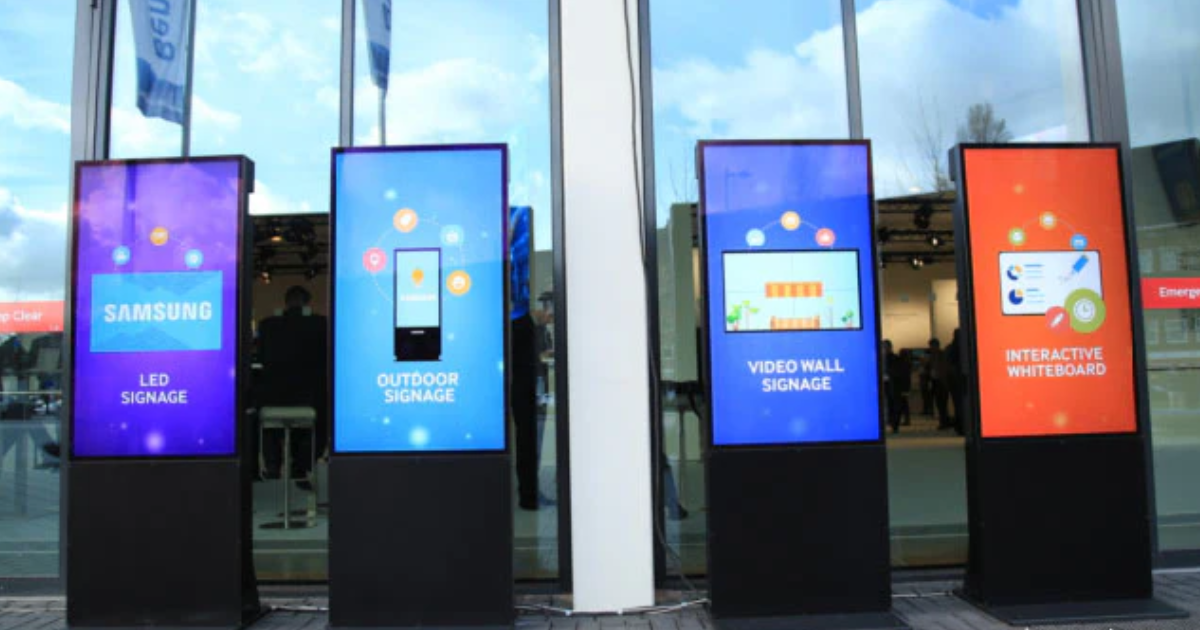
In the digital signage vs traditional displays comparison, digital signage refers to networked display systems managed through a content management platform. Screens can show dynamic content, including video, animations, live data feeds, social media integration, and scheduled programming.
Content updates happen remotely and instantly. The same team managing a single screen can manage a network of two hundred screens across multiple locations with the same effort.
Upfront Cost Vs Long-Term Value
Traditional displays cost less upfront. A printed banner is cheap to produce. But every time the message changes, you absorb a new production cost. Over time, especially for businesses with frequent messaging changes or multiple locations, these costs compound significantly.
Digital signage has higher upfront costs: screens, media players, mounting, cabling, and platform subscriptions. But once in place, content changes are essentially free. Most organizations find that the digital signage vs traditional displays investment pays back within two to three years through reduced print production and faster communication cycles.
Content Flexibility And Scheduling
This is where digital signage wins decisively. You can schedule different content for different times of day, target specific screens in specific locations, and test messages without any physical production. A single campaign can be live across your entire organization within minutes.
Traditional displays require advanced production time. If something changes at the last minute, you are stuck with outdated messaging until the new materials arrive.
Reliability And Maintenance
Traditional displays do not malfunction in the technical sense. A poster stays up until someone takes it down. Digital displays require hardware maintenance, software updates, and network connectivity to function correctly.
That said, modern commercial-grade digital signage hardware is extremely reliable. With a managed services partner, remote monitoring ensures issues are caught and resolved before they affect your audience.
Making The Right Choice For Your Business
In the digital signage vs traditional displays debate, digital wins for most modern businesses that need flexibility, scale, and dynamic communication. Traditional displays still have a place for permanent, location-specific messaging that rarely changes.
If you are ready to explore what digital signage can do for your organization, the team at Projectus designs and deploys enterprise-grade digital signage solutions across Oregon. Contact us today to start the conversation.