


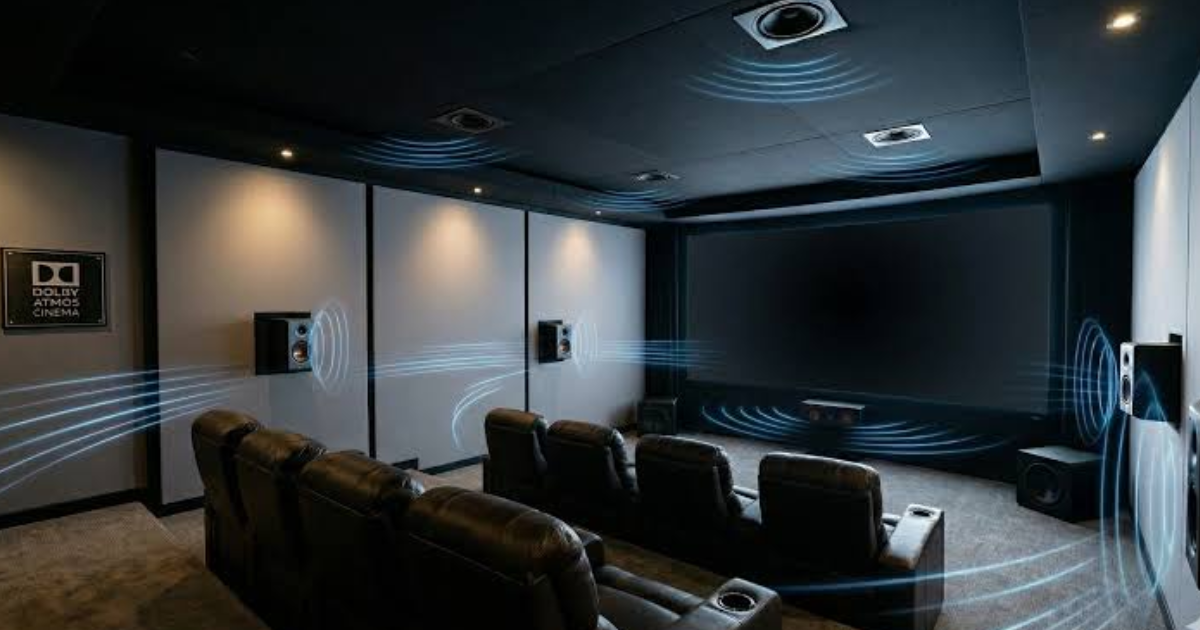
When most people think about audio in a commercial space, they think about a speaker in the corner and a volume knob on the wall. That is a traditional audio system. It works for a small room with a captive audience. It fails in most modern business environments where coverage area, zoning flexibility, and consistent sound levels across large spaces are genuine operational requirements.
Understanding the difference between distributed audio and traditional audio systems helps you make the right investment for your specific environment. Here is a clear-eyed comparison.
What Is a Traditional Audio System?
A traditional audio system typically routes all audio through a central amplifier to a limited number of speakers in a fixed configuration. The speakers play the same content at the same volume, and adjusting the system usually means adjusting the amplifier settings centrally. This approach works well in small, dedicated spaces where the audience is close to the speakers and the use case is straightforward.
The limitations emerge when the space grows, the use cases diversify, or the audience is spread across a large area. A single amplifier driving two ceiling speakers in a 3,000-square-foot open office will not deliver even coverage. The seats near the speakers get too much audio. The seats far from the speakers get too little. There is no middle ground in a traditional audio system designed for a space it wasn’t meant to serve.
What Is a Distributed Audio System?
A distributed audio system places multiple smaller speakers throughout a space, each carrying a portion of the audio load, to deliver even coverage across the entire area. Instead of one or two high-powered speakers trying to reach every corner, distributed systems use many strategically placed speakers that each cover a smaller zone.
This approach delivers consistent sound levels across large spaces, eliminates the hot spots and dead zones that characterize underpowered traditional audio systems, and allows zones to be controlled independently so different areas can receive different content or volume levels simultaneously.
Zoning and Flexibility
One of the most significant advantages of distributed audio over traditional audio systems is zone control. A corporate campus with a lobby, a cafeteria, open offices, and conference rooms has four different audio environments with four different use cases. A distributed system with zone control delivers background music to the lobby, announcement audio to the cafeteria, masking audio to the open office, and meeting reinforcement to the conference rooms, all from the same underlying infrastructure.
A traditional audio system cannot do this without significant parallel infrastructure. Distributed systems make it standard.
Installation and Scalability
Distributed systems typically require more installation planning than traditional audio systems because speaker placement must be calculated for even coverage. However, the long-term scalability advantage is significant. Adding zones, adjusting content routing, or expanding coverage to new areas of a building is far more straightforward with a distributed audio infrastructure than with a traditional point-source approach.
Which Is Right for Your Business?
For small, enclosed spaces with straightforward use cases, a quality traditional audio system may be entirely appropriate. For any commercial space with open floor plans, multiple use cases, large coverage areas, or multi-zone requirements, distributed audio is the right investment.
Design Your Audio Environment the Right Way
Projectus designs and deploys distributed audio systems for commercial and enterprise environments across Oregon including Portland, Tigard, Lake Oswego, Beaverton and more. If you are evaluating distributed audio versus traditional audio systems for your organization, talk with a Solutions Architect about the right approach for your specific spaces.