


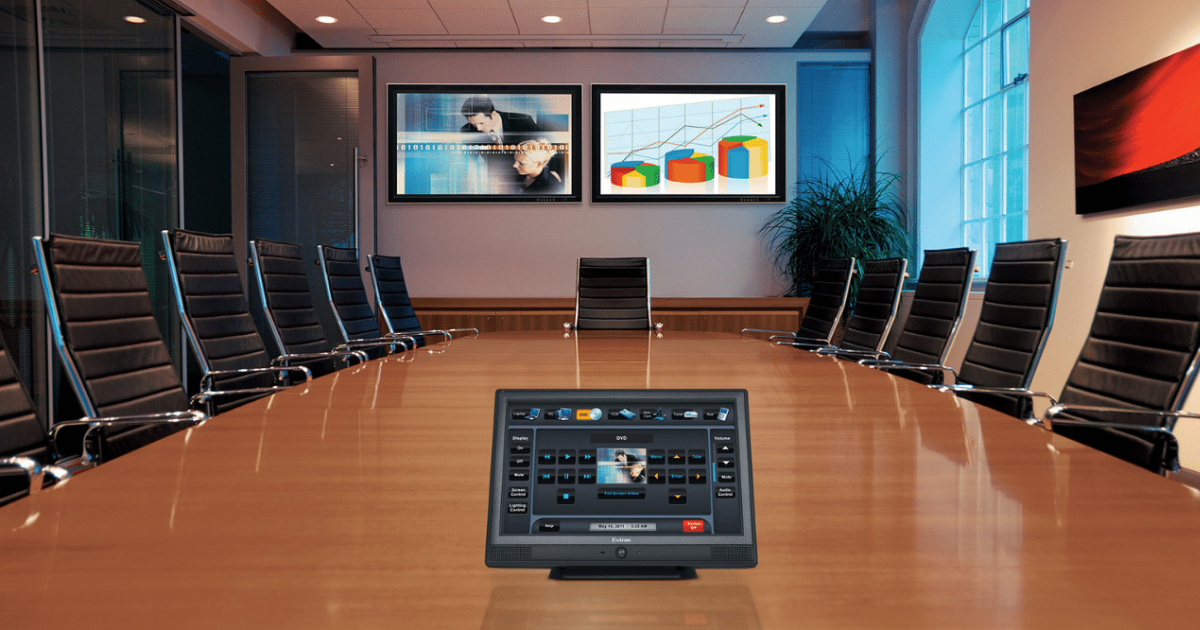
Walk into a well-designed modern conference room and something feels different. The display comes on when you enter. The blinds adjust to reduce glare. The microphone is ready. The room knows what it needs to do before you do. That is not magic; that is AV room automation doing exactly what it was designed to do.
If you have been wondering what AV room automation actually means and whether it makes sense for your organization, you are in the right place. This guide explains it clearly, without the jargon, and shows you why more businesses are making it a standard part of their meeting environments.
What Does Av Room Automation Actually Mean?
At its simplest, AV room automation refers to a system that controls the audio-visual and environmental components of a room through programmable logic and user-triggered commands. Instead of operating each piece of equipment individually, a single control system manages everything through preset scenes or automatic triggers.
A control processor, commonly from manufacturers like Crestron or AMX, sits at the center of the system and communicates with displays, cameras, lighting, climate controls, shades, and audio equipment. When you tap a button labeled Start Meeting, that single action can turn on the display, activate the camera, set room lighting to presentation mode, and connect to your video call platform.
How Is It Different From Just Having Av Equipment?
Having a display, a speakerphone, and a camera in a room is not automation. Automation is what happens when those components are connected to a central control system that can coordinate them intelligently.
Without AV room automation, users have to manage each component separately. Turn on the display. Change the input. Adjust the camera. Dial into the call. Lower the shades. Adjust the volume. That is a lot of steps, and it creates both friction and variability. Someone always does something differently, and meetings suffer for it.
What Can Av Room Automation Control?
Modern AV room automation systems can manage a wide range of room components. Display power and input selection are the basics. Beyond that, systems can control room lighting scenes, motorized window shades, HVAC through building management system integration, video conferencing platform launch, camera presets and auto-tracking, and even room booking panel status.
More advanced setups use occupancy sensors to automate startup and shutdown. When the room detects someone has entered, it wakes the system. When everyone leaves, it powers down. This alone can eliminate the problem of displays left on overnight.
Why Do Businesses Invest In It?
The primary driver is reliability and simplicity. Meetings start on time because the technology does not get in the way. IT teams love it because standardized behavior is easier to support and troubleshoot remotely. End users love it because they do not need to figure anything out.
There is also a real energy efficiency angle. Automated shutdowns and occupancy-based controls reduce unnecessary energy consumption across every room in the building.
Get Av Room Automation Done Right
The value of AV room automation depends entirely on the quality of the design and programming. A system that is poorly configured is worse than no automation at all, because it creates unpredictable behavior that users learn to distrust.
The team at Projectus designs and programs control systems built for real-world use. If you want your meeting rooms to work exactly the way you need them to, talk to us and explore what the right automation setup looks like for your organization.