


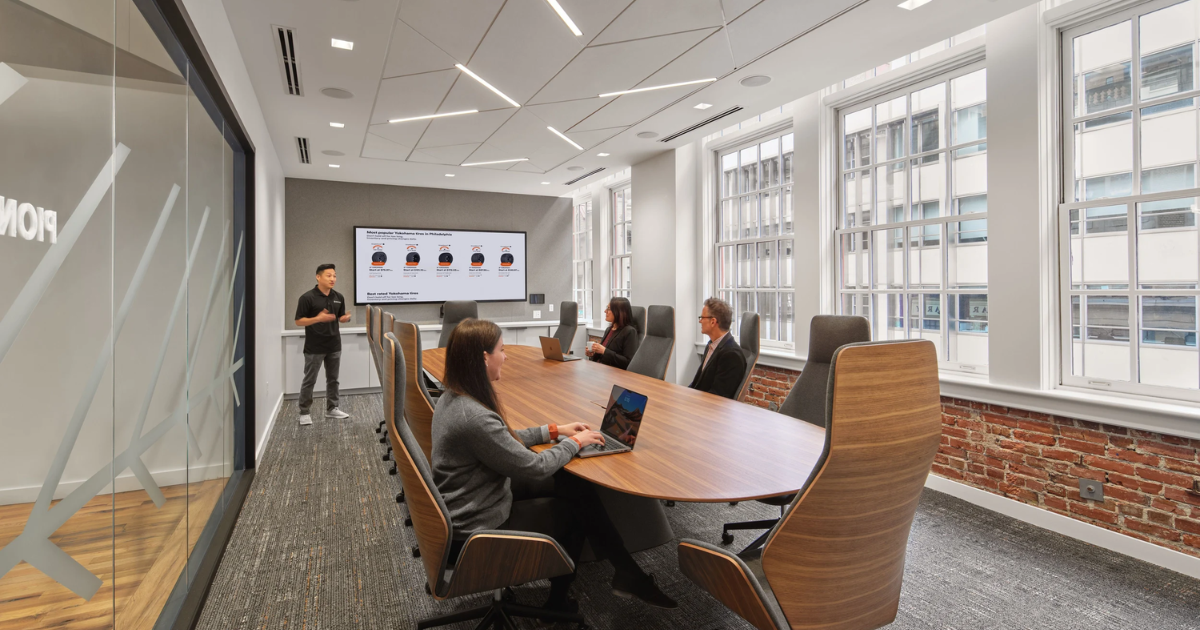
You can usually tell within thirty seconds of walking into a meeting room whether the technology is going to work in your favor or against you. A confusing remote, a screen that will not connect, or audio that cuts in and out tells you everything you need to know. So what actually separates a room like that from one that just works? Understanding what makes an effective meeting room AV system comes down to a handful of fundamentals that are easy to overlook and expensive to get wrong.
It is not about having the most expensive equipment in the building. It is about making sure every component works together for the people actually sitting in that room. Let us break down the pieces that matter most.
Audio That Everyone Can Hear and Understand
Audio is consistently the most overlooked and most complained-about element of any meeting space. Clear speech pickup from every seat, balanced speaker placement, and echo cancellation are non-negotiable parts of what makes an effective meeting room AV system, because poor audio makes even the best visuals feel frustrating.
Ceiling microphones with wide voice pickup tend to outperform tabletop options in larger rooms, since they reduce clutter and cover more of the room without forcing people to lean toward a microphone to be heard.
Displays and Cameras Sized for the Room
A display that is too small forces people to squint, while cameras positioned poorly cut out half the people in the room from a remote participant’s view. Matching display size to viewing distance and camera placement to seating layout is a core part of what makes an effective meeting room AV system genuinely functional.
For larger rooms, multiple cameras or intelligent tracking that follows the active speaker gives remote participants a much better sense of who is talking and what is happening in the room.
Control That Does Not Require a Manual
The best AV systems fade into the background. One touch to join a meeting, clear and simple volume controls, and consistent layouts across every room reduce training time and eliminate the awkward five minutes at the start of every call spent figuring out how things work.
This simplicity is one of the clearest signs of what makes an effective meeting room AV system, since complexity is almost always where user frustration and support tickets come from.
A Layout That Supports the Conversation
Technology alone cannot fix a room with poor sightlines or seating that isolates half the participants. Circular or U-shaped seating arrangements tend to encourage better dialogue than long, narrow tables where people at the end feel disconnected from the discussion.
Lighting matters too. Adjustable lighting that avoids glare on displays while keeping faces well lit for the camera rounds out the physical environment that supports what makes an effective meeting room AV system truly work in practice.
Reliability That Holds Up Over Time
Even the best-designed room degrades without maintenance. Firmware updates, cable checks, and periodic testing keep a system performing the way it did on installation day. This ongoing reliability is often the most underrated piece of what makes an effective meeting room AV system, because a room that worked perfectly at launch means little if it starts failing six months later.
The rooms that consistently work well are the ones backed by a real support plan, not just a one-time installation.
If your meeting rooms are not living up to this standard, Projectus designs and supports meeting spaces built for how people actually meet. Talk with a solutions architect to see what an upgrade could look like.